

Conducting orchestras in live-to-picture concerts is not for the faint-hearted, says Justin Freer, but "it never gets old for me.”
CineConcerts
The still relatively new business of high-definition movie screenings with accompanying live orchestral performances of the films’ scores continues to boom, with hundreds of presentations across the United States and beyond each year.
One of the biggest firms in the field, CineConcerts, based in Franklin, Tennessee, has presented more than 3,000 of these offerings with some 275 orchestras worldwide since it was founded in 2013. Its roster includes such films as “The Godfather” (1972), “Breakfast at Tiffany’s” (1961) and “It’s a Wonderful Life” (1946) and several installments of the Harry Potter cinematic series.
“We’ve had, very humbly, a lovely amount of success in the last 10 years,” said composer, conductor and producer Justin Freer, one of the firm’s co-founders. “We’ve been really happy with what we have been able to put into the space and hopefully we can continue to do so.”
He will return to Orchestra Hall to lead members of the Chicago Symphony Orchestra in live performances Dec. 11-13 of “Elf” in Concert, as John Debney’s score of the contemporary Christmas classic is simultaneously projected above the stage.
It is the second offering in the CSO’s 2026-27 Movies series, which will continue Jan. 29-30 with the 1961 cinematic version of the Broadway musical “West Side Story” and June 25-27 with “Star Wars: The Empire Strikes Back,” featuring John Williams’ unforgettable music.
Perhaps most important to the success of such symphonic film offerings, Freer said, is the choice of films. The quality of the film and musical score have to be in alignment and not tilted in one direction or the other for these presentations to work.
Some movies are wonderful, but their scores offer little in a live performance. But the opposite can be true, too. “There are so many amazing scores out there that have counterpart films that either aren’t that great or are out of the public consciousness,” he said. “That’s also a challenge to line up with people.”
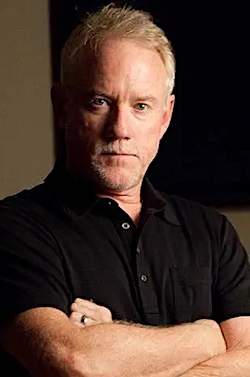 Freer said “Elf” (2003) is an example of a movie that nicely achieves the right balance. “John Debney [at left] is one of the great composers in his craft, because he is so good at being able to move in and out of different styles,” the conductor said. “He’s a real chameleon, and he’s got great chops. He really understands how to orchestrate correctly and well for a large symphonic orchestra.”
“Elf” was far from a sure thing when it was released, Freer said, because of some of the risks that the creators took with the story and characters. Freer believes that Debney’s music helped secure its success.
“John’s a very good tunesmith,” Freer said. “The melodies are so memorable, and he had a lot of fun with the orchestration. You hear whistling in addition to the choir, and you have these fun accordion riffs that make some of the comedy even funnier.
“I just think that we fall in love with Will Farrell’s performance as Buddy the Elf, and John’s music really gets to the heart of Buddy and to the real core of what these characters are feeling. And you get the sense of wonderment, comedy and love, all from the beginning, and I love that about this score.”
When Freer conducts the live performance of Debney’s score for “Elf,” he will have a small monitor next to his music stand showing a special version of the film with markings that help him keep the music and visuals synchronized. The markings include “punches,” dots of light that flash in the corner of the film on the first beat of each bar of the score, and “streamers,” vertical lines that move left to right across the screen and signal tempo changes or upcoming big moments.
While a conductor leading film presentations cannot ignore other aspects of the music-making, the most important element is making sure the tempos are in sync with the events happening in the film, like the Death Star blowing up in “Star Wars.” “If the music comes too early to the visual moment, that’s absolutely disastrous,“ Freer said. ”Even if you are two frames early or even one frame early, it can be disastrous.”
Because there is such a thin margin for error, he said, conducting orchestras in these cinematic concerts is not for the faint-hearted. “Some folks feel really comfortable in that world, and for others, perhaps not so much,“ he said. ”But it’s a wonderful set of problems to constantly having to be solving over the course of a show, and it never gets old for me.”
What makes such split-second synchronization easier, he said, is having an orchestra like the CSO. It is not only a top-level ensemble, but also has been doing these film presentations for enough years that its musicians are completely comfortable with how they work.
In January 2023, Freer was in Chicago to lead “Harry Potter and the Sorcerer’s Stone.” Before the third performance, on the way to get something to eat, he got derailed by a fast-closing door to a temporary winter vestibule outside a restaurant. The door hit him so hard that it dislocated his right shoulder.
He wound up having to both conduct and turn the pages with his left arm, meaning that four or five bars would go by while he turned a page and was not conducting. And the orchestra never missed a beat.
“It was one of the most amazing lessons I’ve been through as a musician,” he said. “Not only did I realize that they don’t always need the conductor up there, but if you have a rapport, and you are conceptually in a framework of knowing time together, it was incredible how I could drop beats, and they were there. It was incredible to watch and listen and feel with that orchestra.
“It’s one of my favorite memories of my whole life. They really saved me.”


